Friday, April 01, 2016

This open door


A recurring dream I’ve had over the years has a door appearing in the hallway of one of my childhood homes in Winnipeg, Manitoba where no such door ever existed.  Doorways in dreams, I’m told, represent novelty, change and new direction.  Apparently it’s very good news when doors appear in your dreams – well done you!    One of the icons of Easter is the empty tomb with the large stone rolled to one side.  You might see it stitched into church banners and worked into stained glass windows.   An empty tomb is an open door.  It’s an uncompleted story – a marvellously altered trajectory.

Isn’t there something “sadly wearying” about the events of the last few weeks with the airport and metro bombings in Brussels?  Shock comes first, of course, but then we see the true intent of such terrorist attacks as they compel people to harden and reinforce their prejudices.  Ah, we say – here’s the trajectory:  Communities driven in upon themselves and communication across cultural and ethnic boundaries faltering.  Suddenly we hear things from normally good-hearted people which seem shocking and abnormal.  We find ourselves thinking some of these same things.  We mediate the shame of feeling this way by appealing to its normalcy.  That’s what always happens, we say.  It’s the way things go because that’s the way the world is or because that’s the way we are.  Why fight it?  They go that way because powerful people are pushing events along that path.  Who are we to stand up to them?   

The Good Friday opponents of Jesus felt that the trajectory was on their side.  They had settled and ended forever this particular rabbi’s take on the Kingdom of God, clicked shut his open door to restoration for the outcasts amongst the common people he’d met and preached to in the Galilee and Jerusalem.  All those parables, those healings, those glimpses of the kingdom – all these were locked away forever. For their part, Jesus’ scattered disciples knew the trajectory was against them.  The story had no extra chapter.  The Jesus story was sealed in a guarded tomb – the new normal.   

The Easter tomb is not an “ordinary” outcome in any generation.  Within the plot of the New Testament this open door remains God’s extraordinary pledge that the world’s predictable downward spirals are not the last word.  

Stitch that on your banners.   Set it in your church windows. Love will achieve its outcome and hope will have its day. 


Thursday, March 31, 2016

The 2nd Sunday of Easter

Year C
John 20:19-31

Thomas doesn't have much of a speaking part in the Gospel of John.

Thomas appears to decline each time he opens his mouth. His first words (John 11:16) were a pep-talk he gave to the other disciples when Jesus suggested a return to Judea where he and his disciples had already been threatened with mob violence. Thomas suggested that they should together go and die with him.  All very noble, this, and the very thing you'd expect an apostle to say.  But something happened to Thomas along the way.  A few chapters later Jesus told his disciples that he was going to prepare a place for them - a home in the heavenly places.  Thomas' response (John 14:5) shows not only that he seems a bit thick and has misunderstood the big picture of what Jesus is saying.  It reveals a deep dis-ease and uncertainty at the centre of his soul

Lord we don’t know where you are 
going, so how can we know the way?

Show me a map.  Explain how it will be.  Tell me where to put my feet.  Which is more or less how Thomas will later challenge the other disciples (John 20:24-29) when he finds himself among people who have witnessed the risen Christ where he himself has not and is asked to share their joy which he believes he cannot.  Show me the map, he says again.  Show me the prints of the nails.  Show me the wounds in the side. 

I will not believe unless…..

This is not a story where the Church mocks Thomas.  Rarely does the question boil down to a  binary issue of whether we have faith or whether we don't as if there were a lottery going on and the lucky among us scratch the little box that reveals with an exclamation mark that “Congratulations you have faith!” and others merely uncover the words “Better luck next time!”  Our Gospel reading this Sunday is a story about God’s active and continuing interest in bringing faith to the surface and nurturing it into visible reality – exactly as Jesus does for Thomas in the story. Faith is discovered by needing and using it and by finding that God indeed makes it possible.   

I've been at this for well over thirty years now and have sat next to all sorts of people facing things which led them to wonder if they had the faith necessary to get through the next month or even the next six hours.  Most of them proved themselves pillars.  Most of them would testify to the active support of something beyond themselves as and while they forged forward with a degree of faith they were not sure they had.

Later stories about Thomas, while in no way certain, are reasonably well-founded.  From his base in Edessa in western Turkey he is said to have then traveled to India.  We may reasonably assume he did so without a map.  He had been schooled in faith at an uncertain time at the wounded hands of Jesus.   You may have been so schooled yourselves.  You may yet be.   You should pray to be.


Sunday, March 27, 2016

Seek, find and be amazed!

Easter Sunday - Year C
Luke 24:1-12


…these words seemed to them an idle tale, and they did
not believe them.  But Peter got up and ran to the tomb;
stooping and looking in, he saw the linen cloths by themselves;
then he went home, amazed at what had happened.

The ancient rubbish tip outside the ancient Egyptian town of Oxyrhynchus yielded a Greek fragment of the curious text of the Gospel of Thomas - an enigmatic book which contains morsels of Jesus material at least as old as our first three Gospels mixed in with odd philosophical and even heretical musings from the third century.  It’s not been included amongst our canonical Gospels for some quite good reasons.  Nonetheless it does yield the odd gem:

(2) [Jesus said], "Let him who seeks continue [seeking until] he finds.
When he finds, [he will be amazed. And] when he becomes [amazed],
he will rule. And [once he has ruled], he will [attain rest]."

There is no question that the disciples and other early witnesses to the resurrection were perplexed, thunderstruck, disturbed and, in the case above, “amazed” by the events of Easter Sunday morning.  That they did not understand immediately doesn’t seem to matter because our Evangelists are telling two parallel stories about the Easter morning events and the appearances of the risen Christ in the days which followed:  What did God do?  And (because the Gospels are designed to be read by men and women of faith and to help refine and underpin that faith with the historical record) How did men and women react to the Resurrection? 

The resurrection of Jesus is not an incomprehensible loud noise which deafens the attending disciples. Their perplexity is temporary.  It will be nurtured into faith through their fellowship with the risen Christ, through his words in the following forty days and through the future confirmation of the Holy Spirit.  This is the remaking of a fallen creation.   God’s pledge is to make that creation new again.  The risen Christ will be not only observed but in fact witnessed (there’s a difference!) and then proclaimed and for that to happen the Resurrection will come to be understood. 

I want to point to one very early response, on Peter’s part, which even preceded his sprint to the empty tomb much less any coherent understanding.  The women had returned with a story which seemed, to the gathered and grieving disciples, a vain and empty tale.  Without any particular textual justification, I can imagine Peter in another room hearing every second word shouted out by grieving and perhaps even angry disciples as they argue with the women.  The words beyond the wall sink in – idle – tale - master – gone – tomb – empty.   The merest shred of possibility presents itself that all is not in fact ended.  Like a dull ember buried deep in the ashes, hope finds a little tinder in Peter’s soul and catches light.   He’s off like a shot.  Prior to faith in full flower there can be both will and openness.  

Keep your ears open.  
Honour the hunger within you.  
Seek until you find.   
Be amazed!


Thursday, March 17, 2016

Palm Sunday 
Passion Sunday
Year C 
Luke 22:14-23:56                                                                                                                   

Do you hear the people sing?

The most recognisable song from “Les Misérables” is set amidst the decay and turmoil of Paris in the 1830’s.   The song is defiant and hopeful.  It is a young person’s song.  The voice of the people will lead the way.  They can be trusted to do the right thing.  Well that’s the theory anyway.  

A number of you this Sunday will note how the long Passion Gospel from Luke is divided up amongst the several voices expressed in the story.   We all have our parts to play.  It’s fitting that ordinary human voices should be heard. 

Jesus has a voice in this long reading. 
Pontius Pilate and the religious authorities in Jerusalem have their voice as well -
and of course there’s that voice of the crowd or the assembly calling out in unison: Crucify him!

What is a crowd, anyway?  Like the man said in the fine print:  Your experience may vary.  

If you’re a policeman a crowd is something to be controlled.  If you’re an entertainer, you might look at the crowd in front of you as something you need to whip up or encourage to sing along with you or to laugh at your jokes.  Those of us who live in democratic societies look to crowds to cast a vote in general elections and referendums.   We delegate, to their hands, the destiny of our nations.

For most of us Passion Sunday is also Palm Sunday.  At the beginning of our service we heard the voice of Jesus’ followers crying out during the Triumphal Entry into Jerusalem that Jesus is blessed and that he is the coming Messiah.  And so we cannot avoid being smacked in the face by the change in the crowd’s tone between one Gospel and the next.  Let’s not try to score any easy points.  This is not a jab at the madness of that particular historic crowd in Jerusalem nor does the Gospel reading join us in in our disdain for a crude contemporary public whose taste in music, religion or politics we might despise.    To avoid ever accusing somebody else we are therefore asked to take our part in the readings this Sunday. 

We are the judged and not the judges. 

Salvation is the gift accomplished by Christ for us and freely given to us.  That’s what the Gospel accounts are at pains to show us in the layered drama of the Passion accounts.   Any potential partners in salvation are peeled away from the story.  Pilate (and with him the greatest administrative state the world had ever known) is out for the count.  The priests and the scribes are out as well (and with them the historic religion that presumed to know God best).  The disciples, Judas - even Peter - either betray or deny Jesus.  God shoulders the burden of the cross himself.    And as for the voice of the people?  

 The crowd, it would appear, is just another failed actor.  


Thursday, March 10, 2016

Lent 5 - Year C
John 12:1-8


“The house was filled with the fragrance of the perfume”

How bright is the lamp? 
How powerful is your space heater? 
How potent is the perfume? 

How able are any of these to fill a room with light or heat or fragrance?  Somebody out there knows the maths and can hold forth on Lumens or British Thermal Units to explain it.  I certainly can’t.

How much is too much?  Rooms can be overheated.  Lights can be too bright.  If you’ve ever sat in a movie theatre, with a group of ladies of a certain generation on their night out together behind you, you know that perfume can be too strong.

Is this what Judas is griping about - that Mary has cracked open a one-pint alabaster jar of expensive imported perfume?  It’s too much, he says, not only wrong but unnecessary!  We might have spent money differently and in a less extravagant fashion.  This comment earns Judas a direct rebuke from Jesus in the story and a critical side note from John the Evangelist which rubbishes his character and his motives.  What John knows (and what you know) is what Jesus reveals just prior to the last supper:  Judas is on the wrong side of the fence – as critics sometimes are.  He feigns an attitude of care but fears the loss of his control.

Who is in control?  These are little people, remember.  They are not the big beasts of their generation.  Moreover, they stand at the beginning of a chapter in Jesus’ earthly life where nobody but God is in control.  The anointing at Bethany is the overture to the Passion Narrative in John’s Gospel as well as Mark’s and Matthew's Gospels.  It is the starting gun.  From this point on, everybody from Judas to Peter, to Pontius Pilate and the High Priest plays the role that has been chosen for him and the son of God goes to the cross as it has been written. 

She’s done it before - Mary of Bethany.  She correctly discerns what the right attitude in such circumstances might be – the “one thing [which] is needful” in this prelude to Christ’s Passion.   It alone makes sense at the beginning of a week which will see their world turned upside down.   It takes the form of an extravagant and overt act of adoration, of love and of worship. Wordlessly she draws attention to the One in their midst who is giving himself for the life of the world

It is a gift beyond argument, dispute and objection. 
It is the small planet settling into orbit around the grander sphere.
It is the servant bringing the fruits of the harvest to the master. 

She has understood. 
And have you? 

Worship is not a periodic obligation, sparing and conservative (perhaps even self-serving) like one of Judas' disbursements.   It is the pouring out of our substance at Jesus’ feet as a response to what he has accomplished for us.  Even the worship of little people like ourselves has its own power over powerlessness.  It fills the room.


Friday, March 04, 2016

The Canadian House of Bishops' Statement on the Marriage Canon

The bishops decided, Alexander said, that they should communicate their own dividedness on the issue in advance of the next meeting of CoGS, scheduled March 10-13, because “in many ways the House of Bishops is a microcosm of the church, so it’s not just us who were feeling ripped in a whole lot of different directions about it, but it’s going to be the same for everyone who comes to General Synod.”
Sharing their own struggles “might be helpful as they [CoGS members] were thinking about process,” she said.
- See more at: http://www.anglicanjournal.com/articles/-bishops-statement-an-attempt-to-be-forthright-and-honest#sthash.gRMGiEbl.dpuf
The announcement came first in a statement on the 29th of February from the Canadian House of Bishops to the Council of General Synod following the bishop's meeting (Feb 23rd-26th) in Nova Scotia.  With respect to a first reading of a revision to the Marriage Canon to be discussed at General Synod in July of this year, it was ascertained, during the bishops' meeting together, that:
...the draft resolution to change the Marriage Canon to accommodate the marriage of same-sex partners is not likely to pass in the Order of Bishops by the canonical requirement of a 2/3rds majority in each Order. 
 The bishops' statement continued on to state:
We continue to wonder whether a legislative procedure is the most helpful way of dealing with these matters.
This was followed by an article in the Anglican Journal on the 2nd of March which served as a springboard not only for those variously dismayed or encouraged by the the fact that fewer than 2/3rds of our bishops might vote to pass such a revision but also for those who felt that the process of Synodical discussion was being "torpedoed" by a bishops' straw poll released five months prior to General Synod as well as for some who believed the bishops' statement to be an example of good sense and fair warning.

If the General Synod of the Anglican Church of Canada as a whole proves differently minded from the House of Bishops at the end of a long and honest debate this summer, then the House of Bishops would be faced with a quandary.   It will be interesting to see what transpires. It’s not a critical moment which can be palliated ahead of time or felt by degrees or introduced gently in increments. It is in July and not at the end of February that a failure to achieve a 2/3rds majority in the Canadian House of Bishops would need to be demonstrated with opinions revealed and the rationale behind those opinions expressed (in the lead up to the vote) on the floor of Synod by bishops on both sides of the issue along with those caught in the messy muddle in the middle.

This is as it should be.

The bishops decided, Alexander said, that they should communicate their own dividedness on the issue in advance of the next meeting of CoGS, scheduled March 10-13, because “in many ways the House of Bishops is a microcosm of the church, so it’s not just us who were feeling ripped in a whole lot of different directions about it, but it’s going to be the same for everyone who comes to General Synod.”
Sharing their own struggles “might be helpful as they [CoGS members] were thinking about process,” she said.
- See more at: http://www.anglicanjournal.com/articles/-bishops-statement-an-attempt-to-be-forthright-and-honest#sthash.gRMGiEbl.dpuf
The bishops decided, Alexander said, that they should communicate their own dividedness on the issue in advance of the next meeting of CoGS, scheduled March 10-13, because “in many ways the House of Bishops is a microcosm of the church, so it’s not just us who were feeling ripped in a whole lot of different directions about it, but it’s going to be the same for everyone who comes to General Synod.”
Sharing their own struggles “might be helpful as they [CoGS members] were thinking about process,” she said.
- See more at: http://www.anglicanjournal.com/articles/-bishops-statement-an-attempt-to-be-forthright-and-honest#sthash.gRMGiEbl.dpu
The bishops decided, Alexander said, that they should communicate their own dividedness on the issue in advance of the next meeting of CoGS, scheduled March 10-13, because “in many ways the House of Bishops is a microcosm of the church, so it’s not just us who were feeling ripped in a whole lot of different directions about it, but it’s going to be the same for everyone who comes to General Synod.” - See more at: http://www.anglicanjournal.com/articles/-bishops-statement-an-attempt-to-be-forthright-and-honest#sthash.gRMGiEbl.dpuf
The bishops decided, Alexander said, that they should communicate their own dividedness on the issue in advance of the next meeting of CoGS, scheduled March 10-13, because “in many ways the House of Bishops is a microcosm of the church, so it’s not just us who were feeling ripped in a whole lot of different directions about it, but it’s going to be the same for everyone who comes to General Synod.”
Sharing their own struggles “might be helpful as they [CoGS members] were thinking about process,” she said.
- See more at: http://www.anglicanjournal.com/articles/-bishops-statement-an-attempt-to-be-forthright-and-honest#sthash.gRMGiEbl.dpuf
I was told by one of my undergraduate professors that "in many ways" almost always precedes a statement of dubious or uncertain value.  It should really be interpreted to mean "in not very many ways".  Bishop Jane Alexander of Edmonton has stated, that "in many ways the House of Bishops is a microcosm of the Church”.   This needs to be tested.  If it's true then  it must be taken for granted that our Bishops will be participants in the synodical process, that they will listen and that they will gather in small groups with priests, deacons and lay people to whom they bear some accountability for their public reasoning.  They will navigate points of view which are not their own.  They could, potentially, change their minds.  In a synodical system the constituent parts do, in fact, speak for the whole in terms of the passage of such a canonical revision.   Legislation will not pass unless it passes at every level.  At the very least, though, the other two houses must be allowed make up their mind.

I think an expression by the House of Bishops to the CoGS that, as it stands in the context of its closed door meeting at the end of February, a 2/3rds majority should in no way be assumed in July, or is even unlikely, probably constitutes due diligence on its part.  I’m glad such a statement was made.  It seems a fair "heads up" to those involved in preparing the discussions.

But that’s as far as it goes.

that they should communicate their own dividedness on the issue in advance of the next meeting of CoGS, - See more at: http://www.anglicanjournal.com/articles/-bishops-statement-an-attempt-to-be-forthright-and-honest#sthash.gRMGiEbl.dpuf
The statement by the bishops and the follow-up article in the Anglican Journal gave voice to suggestions for something other than a legislative process – something other than the open discussion, the private conversations and the voting by orders which have accompanied every other change in liturgy, doctrinal development and ecclesial practice undertaken by the Anglican Church of Canada. 

A gulf between the mind of the bishops and the rest of General Synod would be a valuable datum should that prove to be the case in July.  As uncomfortable as it might be it would nonetheless be the truth.  It would be good to know.
The bishops decided, Alexander said, that they should communicate their own dividedness on the issue in advance of the next meeting of CoGS, scheduled March 10-13, because “in many ways the House of Bishops is a microcosm of the church, so it’s not just us who were feeling ripped in a whole lot of different directions about it, but it’s going to be the same for everyone who comes to General Synod.”
Sharing their own struggles “might be helpful as they [CoGS members] were thinking about process,” she said.
- See more at: http://www.anglicanjournal.com/articles/-bishops-statement-an-attempt-to-be-forthright-and-honest#sthash.gRMGiEbl.dpuf




Thursday, March 03, 2016

Lent 4 - Year C                                                                       
Luke 15:1-3. 11b-32                          


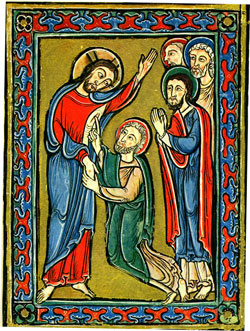
Put yourselves in the shoes of one of the characters in this Sunday's parable of the Lost Son:  Which boy are you, then?  You might identify more with the father  – your choice could well reflect the things which have happened to you in the course of your life.  When the Pharisees gathered at the margins of the crowd listening to Jesus speak they noted with dismay how many outcasts and misfits had gathered to listen.  Jesus set the Pharisees more or less this very task:  Who are you in this story?

One of the two boys went off the rails, taking a piece of the family fortune with him.  He came back recently with his hat in his hand after months of indignity, pain and deprivation.  Life “off the rails” proved a dreadful combination of place and circumstance which the boy still cannot describe without tears.  

The father welcomed the lost younger son.  This he did joyfully, extravagantly and with generosity.  He didn't spare his own dignity and even endured being cast as an old fool for the way he ran out on bandy legs to meet the boy when he was still a fair way down the road.  Ridiculous?   Old and foolish?  The only feeling he can remember was the palpable joy and anticipation at having the boy whom he loved and thought he’d lost back at the family table.  That was feeling enough for one day.

The old man now reasons gently with his older son who is mightily put out by his father’s public welcome of the prodigal and is boycotting the homecoming party.  His father was forced to get up and leave the festive table to go outside where his son was lingering under a tree, livid with rage and humiliation.  He speaks slowly to him.  It’s not that the older boy is stupid, mind.   There is, nonetheless, something quite basic that he has not understood. 

What should a father share with a son ?  What does a son inherit?  Is it an inventory of barns, grazing lands, outbuildings, servants and equipment?  When we are strong and in control we might concentrate the goods of the father in our own possession without sharing much of his character. What sort of inheritance is that?  The estate is ours by right.  A jury of our peers would agree.  So what?  If the point of our belonging is that somebody else does not belong, then what does that say about us?  Cold calculations always cast the realm of feelings to one side but this story cannot be divorced from the father’s feelings for the one who is lost - it is the heart and engine of this parable.  It is love and not right which makes the world go round.  

Children are a perpetual worry.  The day of great risk for the prodigal is over.  As we speak now he is in the house wiping a bit of grease from his chin and raising a cup to his lips.  He has been restored to the table.  It is love and concern for the older brother which motivates the father's second trip of the day and all his hushed remonstrations in the garden with a son who, curiously, has everything and nothing at the same time   

The day of risk for that boy has just begun.  


Wednesday, February 24, 2016

Lent 3 - Year C                                                                                                               
Exodus 3:1-15


Moses had landed on his feet.  He'd escaped a murder charge in Egypt and was now in the process of working on his pension.  He'd met a young woman in the neighbouring land of Midian, married her and had gone to work for her dad Jethro as a shepherd.   On the day in question he was following the sheep along a straight desert track toward better grazing land further up.  Jethro’s sheep would one day be his sheep.   These flocks, this country and this life would be his flocks, his country and his life.  Egypt was all behind him and even more remote was the intrigue of having been a Hebrew hidden like a guilty secret within the household of Pharaoh.  It was a complicated life this Moses had led and one filled with risks since his childhood.

In Midian, though, everything had "come up roses".

Brick fits onto brick.  That’s how the wall gets built.  Chapter is added to chapter until the apogee is reached and the story then can coast to a respectable end.  Moses needed only to keep his eye on the ball.  It was not complicated.  One foot needed to go in front of another.   Those fat sheep must be directed down the straight path. That’s all.  Nothing else.

This would be a good place as any for you to insert your *sigh*.   Do it here.  For at this moment something twinkled on the horizon as a bush spontaneously ignited into flame.   The story of Moses’ commissioning by God and the whole story of the Exodus - the pivotal chapter in Israel’s history – did not debut with God commanding Moses to take off his shoes in front of the burning bush or explaining to him how he would be sent back to Egypt to rescue his people.   It actually began a few lines earlier with Moses’ own fateful words to himself:

"I must turn aside and look at this great sight, and see why the bush is not burned up."

Curiosity kills the cat but it also ushers in new epochs in history.   It changes the fortunes of those who allow themselves the luxury or the lunacy of not looking straight ahead.  Were you chided by teachers, coaches and well-meaning uncles about not following the straight line?  Would you not have been further ahead if you'd refined your resources, purified and concentrated your materials?  "Straighten the lines of your progress..  Above all, don’t get distracted"!  

God constantly stands in the midst of the settled paths of prophets, patriarchs and initiates to the Communion of Saints.  Our iconography has a tendency to depict our heroes with resolute and slightly elevated gazes as they stare intently at their goals.   But - before they were ever useful to God by being resolute and unshakable they were useful to him because they could be distracted - distracted from their day jobs and unstuck from all their several necessary trajectories.   God could depend on them to shift their gaze from their desks and direct it out the window. 


Wednesday, February 17, 2016

Lent 2 - Year C
Luke 13:31-35                                                                                     


The verb – thelo (to wishwant or desire) appears three times – twice positively and once negatively - in our short Gospel reading from Luke this Sunday.  Herod desires to kill Jesus.  Jesus desires to gather God’s people in Jerusalem under his wings like a mother hen.  The residents of Jerusalem, however, have no desire to be so gathered.  It’s a bit like watching from a hillside as two cars speed towards each other along perpendicular routes.   “Stop”, you cry, “or something terrible will happen”.  There are shades of Italian opera here – Giacomo desires Lucinda, Lucinda desires Paulo and Paulo is completely uninterested or is distracted or is a fool or is simply not the marrying type.  If your high-school-aged child related a similarly connected string of unrequited love amongst her pals in class you might say to yourself:  My word, this will all end in tears.

The question of the Gospels is this:  How will God win for himself a family in the ministry of Jesus his son?  
·         The stakes, you see, are so high, 
·         the power of Jesus’ enemies is so strong 
·         and the hearts of the people are so cold and resistant.  

And now Jesus proposes to leave the Galilee and proceed forthwith to the city so long a source of death to prophets.  That impact at the crossroads is certain.  The result of this impossible equation of love will indeed, either by accident or design, be tears.

Have your ears have been open for the last few weeks?  We are full-steam-ahead towards the tears of Holy Week and Good Friday.  In the story of the Transfiguration, which we read together on the last Sunday of Epiphany (Luke 9:28-36), Moses and Elijah were perceived, at either side of Jesus, by the sleepy disciples.  What they discussed was specifically what Jesus would accomplish in Jerusalem which was ‘his departure’.  On the first Sunday of Lent readers were sent back to an early moment in the Gospel account (Luke 4:1-13) where Jesus deliberately set aside and rejected the very tools – safety, strength, the gift of kingdoms and acclaim – which would have prevented those tears and guaranteed his domination of the crowds and his welcome by the several hierarchies of his day.  Jesus forswore these means – one after another.  They were not his Father’s gifts.

What we must piece together from the narratives and sayings of the first three Gospels is clearly stated in the Prologue in John at the very outset:  Light [had] come into the world, and men loved darkness rather than light.  The remedy from the beginning will be Jesus’ self-giving unto death.  He knows himself to be part of a big story and Herod can therefore have no part in it.  Herod's ghastly desire is an empty threat.  Jesus words to him are rightly a rebuke Jesus is aware of the weakness of human beings.  They cannot be led like an army or instructed like a classroom.  His words concerning them are rightly a lament.  They are broken and he must die for them.  He will hold them in his lasting and effective love forever. 


Thursday, February 11, 2016

The First Sunday in Lent
Year C
Luke 4:1-13


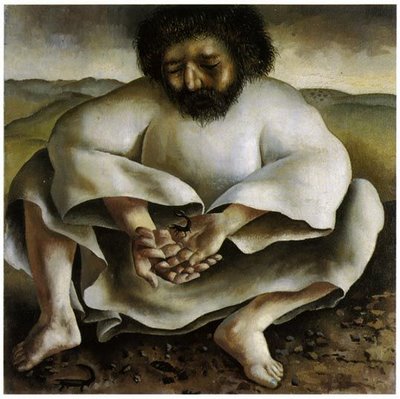
Sunday School children will tell you that the answer to any question is always “Jesus”.  The answer to the question “What is the story of the Temptation in the Wilderness about” is no exception.  In other words, it’s not about you.  Luke is not coaching you about chocolate, card games, red wine or exercise.  These may be issues - you’ll simply need to find another text.  In this Sunday’s Gospel reading we are observers of the beginning of Jesus’ ministry following his baptism in the river Jordan and as we go through the opening words of the episodes in Mark’s, Matthew’s and Luke’s version of the story we note a subtle difference in language

Mark:  The Spirit immediately drove him out into the wilderness…
Matthew:  Then Jesus was led up by the spirit into the wilderness…
Luke:  Jesus, full of the Holy Spirit, returned from the Jordan, and was led by the spirit for forty days in the wilderness….

Matthew and Luke are the only two writers who detail the explicit events of Jesus’ sojourn in the wilderness – what he came to define or discover or to show about himself and it is fitting that they express this as being at the leading of God’s Spirit.

Two questions could be asked.  What happens to Jesus in the wilderness? And what will happen in the story as it continues beyond our reading into the first verse of the next part of Luke’s account - 4:14?  Second things first, alors.  Beyond the end of our reading Jesus will emerge into his public ministry in the Galilee still very much in the power of God’s Spirit in his words and acts.  Whatever happened to him in the desert has not compromised him.  It has defined and sharpened his mission.  Back to the first question: So what happened in the wilderness?

In the wilderness Jesus lived with gaps – with things that he did not have.  He had no bread (hunger).  He had no power or public acclaim (solitude).  He had no safety (at the mercy of beasts and thieves).  The devil offered him solutions to these problems which, on one hand, might seem to better equip him for the public ministry that will follow but for which faith in God could never be credited.  Jesus said no.  The power of the Spirit remained with him.

It will take an entire Gospel to explain how God expresses his saving power through this Jesus who refuses a crown and speaks the truth powerfully from a standpoint of weakness and want.  You’d need to add the letters of Saint Paul to find out how a rag tag collection of early Christians will express that same invitation to God’s friendship.  Add to that cloud of witnesses St Francis and St Claire, every missionary to a hostile population, every Christian activist who bore witness to powerful oppressors.  It has ever been so.